

Written by Communications Solutions UK
November 17, 2026
- AI Is Here. But is your business ready?
- What does being AI ready actually mean?
- Four foundations every business should consider
- Start with a problem, not an AI product
- Don’t forget the people
- Experiment first, then create structure
- AI still needs human judgement
- What should businesses do next?
- Frequently asked questions
- Key takeaways
- Related Articles
In this blog, we look beyond the AI hype and share what businesses really need to have in place to get practical value from AI.
AI Is Here. But Is Your Business Ready?
AI is already finding its way into everyday business. However, getting real value from it takes more than giving people access to the latest tools. At our latest Smarter Business seminar, we explored what being genuinely AI ready means and why the foundations matter as much as the technology.
There’s no shortage of conversation about artificial intelligence. The more important question for business leaders is whether their organisation is actually ready to use it well.
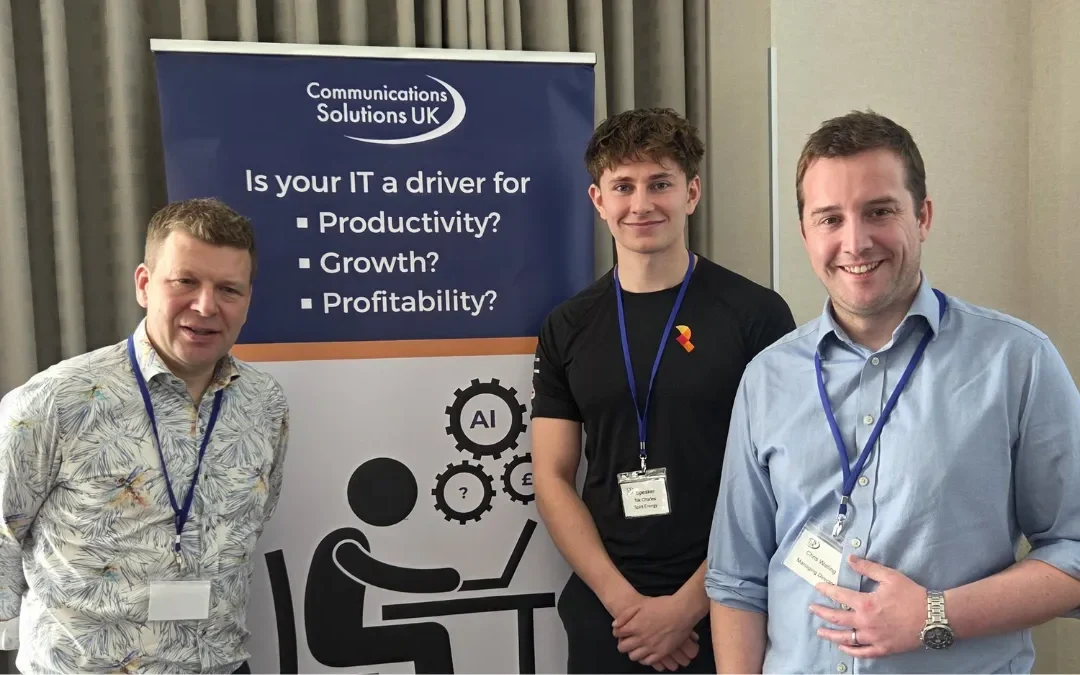
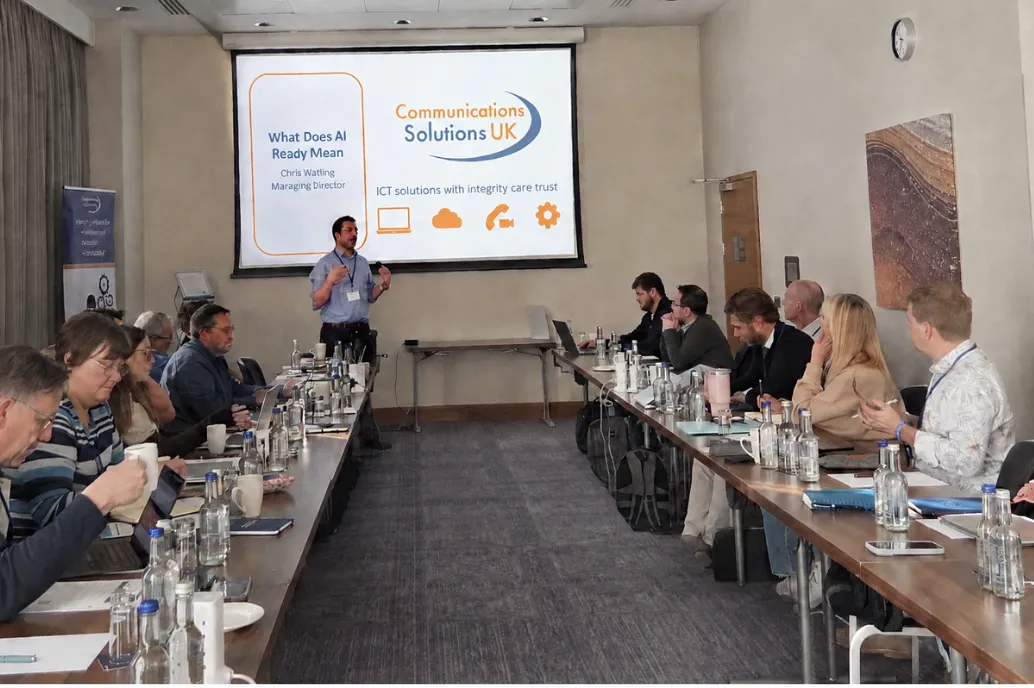
At our Smarter Business seminar in Reading on 13 November, Chris Watling of Communications Solutions UK, Tok Charles of Spirit Energy and Tim Butler of Innovation Visual approached that question from different perspectives. Yet a common message quickly emerged: being AI ready isn’t about buying the latest product. Instead, it’s about creating the right conditions for AI to deliver useful, safe and measurable results.
Here are some of the key lessons from the day, and more importantly, what they could mean for your business.
What does being AI ready actually mean?
For Chris Watling, Managing Director of CSUK, the answer is refreshingly straightforward: being ready means being ready to start.
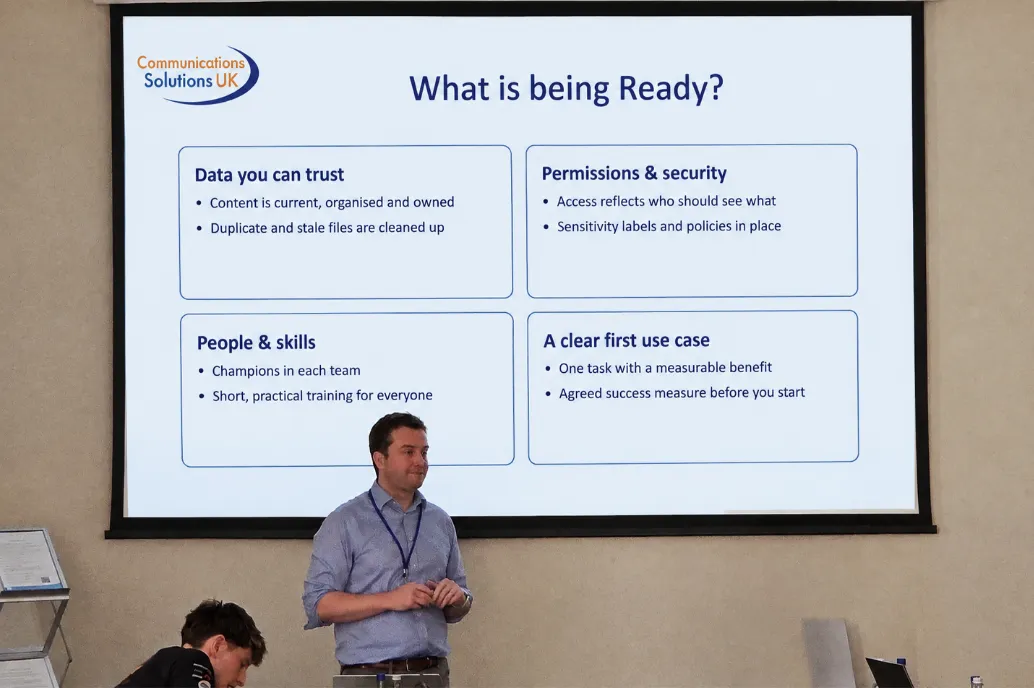
That requires four things:
- Information you can trust
- Appropriate security and access controls
- People who understand and support what you’re doing
- A clear problem you want AI to help solve
For example, the temptation is often to start with the technology. Should we use Microsoft Copilot? Claude? ChatGPT? Gemini?
However, that’s rarely the most important first decision.
Many businesses are already experimenting with several AI tools. Some employees may be using personal or unmanaged accounts, while enthusiastic colleagues are discovering useful applications for themselves. The challenge comes when a business tries to turn those individual successes into something consistent, secure and repeatable.
That is where AI readiness really matters.
Four foundations every business should consider
During the seminar, Tim Butler, CEO of Innovation Visual, explored four foundations businesses should consider before using AI at scale: data, systems, processes, and people and governance.
You don’t need to become an AI expert. However, weaknesses in any of these areas can limit the value you get from the technology.
1. Get your information in order
AI needs reliable, up-to-date information to work from.
Imagine you have four versions of an HR policy stored in SharePoint, but only one is current. If an AI assistant can access all four, how does it know which one to use?
Similarly, an outdated price list could produce an incorrect quote, while obsolete technical information could lead to poor advice.
Before connecting AI to important business information, ask:
- Do we have multiple versions of important documents?
- Is there a clear, current version?
- Who owns the information?
- What level of access do people need?
- Is important data scattered across different systems?
Getting your information organised may not sound as exciting as deploying an AI agent. However, it could be one of the most valuable things you do.
2. Simplify before you automate
The same principle applies to your technology and processes.
Many SMEs have accumulated systems over time. For instance, customer information may be in a CRM, financial data in an accounts package, operational details in spreadsheets and documents in Microsoft 365.
That isn’t necessarily a problem. However, difficulties start when information conflicts or systems don’t communicate.
Tok Charles shared a relatable example from Spirit Energy. The family solar business had relied heavily on Microsoft Excel alongside its CRM, SharePoint and other systems. Some spreadsheets had become so important and complicated that nobody wanted to touch them.
Rather than simply adding AI on top, the underlying process needed attention.
Using Claude, Tok Charles has since created tools for scheduling, quoting and HR, including a scheduling system connected with HubSpot and QuickBooks.
The lesson is simple: don’t automate complexity just because AI makes it possible.
In other words, your first AI project may actually be a process-improvement project.
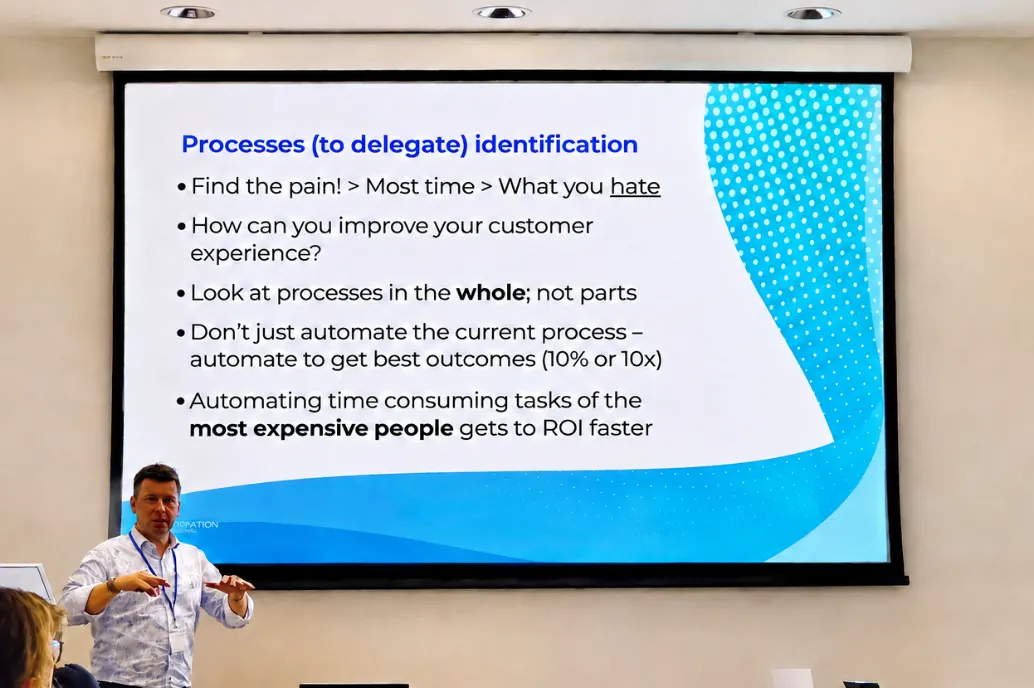
3. Start with a problem, not an AI product
One of the strongest messages from the day was how simple the starting point can be.
You don’t need a company-wide AI transformation programme before you start experimenting. Instead, choose one repetitive task that takes time and has a clear outcome.
That might be:
- Preparing meeting notes and actions
- Summarising information
- Creating a regular report
- Handling an administrative process
- Drafting commonly used documents
- Finding information that’s currently difficult to locate
Then measure what happens.
How long does the task take today? What does a good outcome look like? Once you know that, you can assess whether AI could make the task faster, more accurate or easier for your team.
This approach makes the benefits easier to understand. Importantly, it also helps you learn without putting a large or sensitive process at unnecessary risk.
The seminar recommendation was to look for high-impact, low-effort opportunities first. As a result, you can benchmark the existing process and see whether AI genuinely improves it.
4. Don’t forget the people
It is easy for conversations about AI to become conversations about software. Yet one of the clearest messages from all three speakers was that people determine whether the technology succeeds.
As Chris Watling put it:
“If we do not bring the people along, it will always fall over.”
Some employees will be excited by AI and start experimenting immediately. Others, however, may worry about getting it wrong or wonder what AI means for their role.
Those concerns shouldn’t be dismissed.
At CSUK, we see AI as an opportunity to remove repetitive, low-value work and give people more time for tasks where their experience, judgement and relationships really matter.
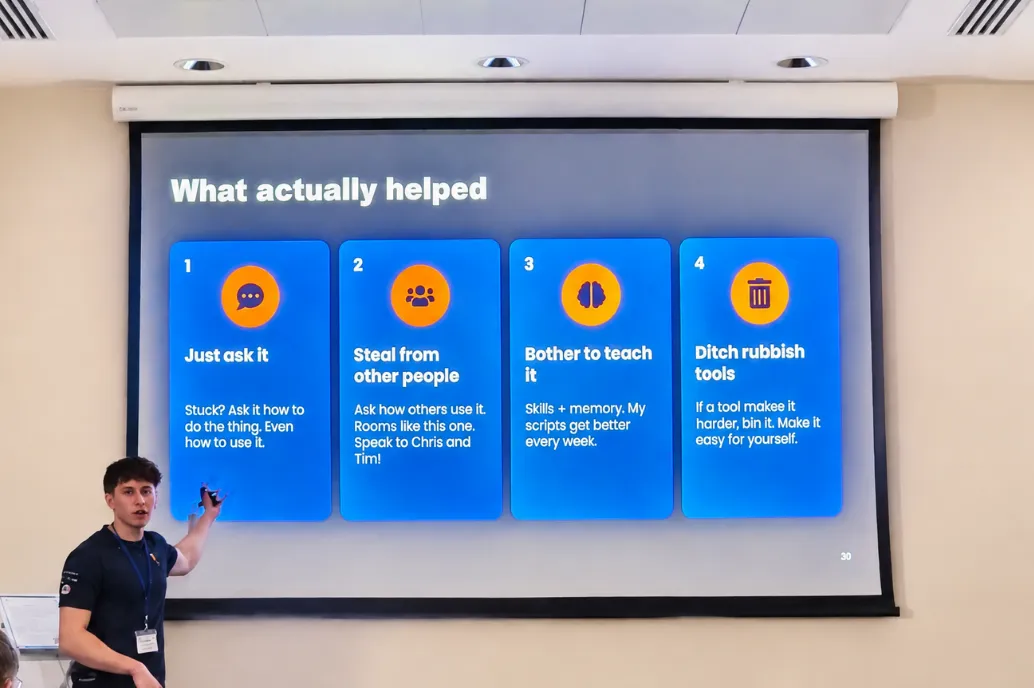
One practical approach is to identify a few enthusiastic employees who can become AI champions. Give them room to experiment within clear boundaries and encourage them to share what works.
At the same time, support colleagues who are less confident. Tok Charles described spending an hour with someone who had barely used AI. With some practical help, that person became one of the stronger users in the business.
Ultimately, AI adoption doesn’t happen simply because you buy licences.
Experiment first, then create structure
There’s nothing wrong with playing with AI. In fact, it’s often exactly where businesses should begin.
The important step comes afterwards.
Chris Watling described a journey from ad hoc experiments, through pockets of success and shared standards, towards structured AI that can become measurable and repeatable across an organisation.
That balance matters. Too much control at the beginning can discourage useful experimentation. In contrast, letting everyone use whatever they like without boundaries can introduce security, data and cost risks.
The aim isn’t to stop innovation. Instead, it’s to find what works and then put enough structure around it to use it confidently.
That approach fits closely with our culture at CSUK. Integrity, Care and Trust (ICT) are particularly important when businesses adopt AI. We believe in being clear about what the technology can and can’t do, protecting information, and recommending an approach because it’s right for the business rather than simply because it’s new.
AI still needs human judgement
AI can sound convincing and still be wrong.
As Tim Butler explained, the large language models behind tools such as Copilot, ChatGPT and Claude generate responses based on patterns and probabilities. Therefore, reliable source information and clear instructions play an important part in the quality of the output.
For this reason, human judgement still matters.
Businesses should decide where AI can be used, what information can be shared, who checks important outputs and which activities require additional controls.
In addition, security becomes particularly important when businesses start creating their own AI-enabled applications. Anything business-critical should be properly tested, backed up and checked before people rely on it.
What should businesses do next?
If you’re interested in AI but aren’t sure where to begin, resist the urge to start with a shopping list of products.
Instead:
- Choose one repetitive task. Find something useful but manageable.
- Write down how it works today. If the process exists only in someone’s head, map it first.
- Measure the starting point. Understand the time, effort or cost involved.
- Check the information behind it. Remove duplicates and outdated information.
- Try AI on a controlled basis. Test the output rather than assuming it’s right.
- Involve other people. Different users often uncover issues or opportunities you haven’t considered.
- Capture what works. Save useful instructions, prompts and processes.
- Finally, check the risks before scaling up. As AI gains access to more information or systems, security and permissions become increasingly important.
You don’t have to solve everything before you begin. Instead, start somewhere useful, learn from the results and then improve.
Frequently Asked Questions
Does my business need an AI strategy before we start?
Not necessarily. A small, low-risk project can teach you a great deal. However, as AI use grows, clearer rules around ownership, security and expected outcomes become increasingly important.
Do we need Microsoft Copilot to become AI ready?
No. The right tool depends on the job. Our seminar covered Microsoft Copilot, Claude, ChatGPT and Gemini. Therefore, the important point is to match the technology to the task rather than choosing a product simply because it’s well known.
Where should an SME start with AI?
Pick one useful but relatively straightforward piece of work. First, understand the current process and measure it. Then, run a controlled experiment and, if it works, develop it from there.
Key Takeaways
In summary, the key messages for our SME business leaders, from our AI Ready seminar were:
✅ Start with a business problem, not an AI product.
✅ Reliable information matters. AI can’t magically fix confused, duplicated or outdated data.
✅ Understand a process before trying to automate it.
✅ Bring your people with you. AI adoption isn’t simply a technology project.
✅ Experiment first, then put structure around what works.
✅ Keep security, permissions and human judgement in the process.
✅ Above all, measure the benefit. AI should solve real business problems rather than simply prove the technology works.
How CSUK Can Help
You don’t need to become an AI expert before your business can start benefiting from it.
CSUK can help you identify where AI could genuinely make a difference, assess whether your Microsoft 365 environment, information and permissions are ready, and determine which tools fit the job. In addition, we can help with practical training, AI strategy, security and taking successful ideas from experimentation into supported business use.
Most importantly, we’ll give you an honest view of where AI can add value and where it may not. That’s part of bringing Integrity, Care and Trust (ICT) to the way we help customers adopt new technology.
If you’d like to explore where AI could make a practical difference in your business, talk to the CSUK team.
Book Your AI Readiness Review
To take the next step, talk to CSUK today and discover how AI can help your organisation work smarter, improve productivity and stay ahead of the competition.
GET IN TOUCH!
We want to hear about your challenges. Talk to us! Our consultants can audit your systems, plan changes, implement improvements and support your people.
Related Articles
Microsoft Copilot: From Answering to Doing
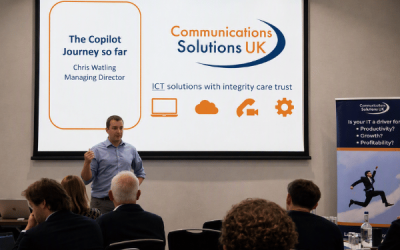
Agentic AI Seminar Highlights: Practical AI for SMEs

High Growth Award
We are proud to announce that Communications Solutions UK have received a second High Growth Award for consistent business growth.
Follow us on :
Services
IT Consultancy
Communications Services
Service Levels
Resources
Terms & Conditions
Privacy Policy
Mobile Roaming
Quick Links
Success Stories
Contact US
About US
Blog
GET YOUR FREE IT AUDIT!
To give you confidence in our service, get to know us and how we work, contact us for your Free IT Audit.
The IT Audit
- Provides us with the information to assess the status of your systems.
- Identifies any vulnerabilities and potential concerns.
- Shows you how we manage your systems and report back.
GET IN TOUCH
Tell us what you'd like to improve. Let’s talk.
Whether you’re facing an IT challenge, planning a change or simply wondering if there’s a better way, we’re here to help.
Our friendly consultants can review your systems, recommend practical improvements, manage the changes and support your people along the way.